
Hobonichi Techo: A Planner as the Book of Your Life
A planner can be a place for appointments, deadlines and to-do lists. But also for a sentence you do not want to forget, books you have read, a recipe, a sketch from a café, a concert ticket, or a few lines about an entirely ordinary day.
This is exactly the idea behind Hobonichi Techo. A Japanese planner its creators describe as a Life Book. It is not designed to tell you there is only one correct way to plan. Instead, it creates a thoughtfully designed space that you can adapt to your own life.
For some people, Hobonichi is a work planner. For others, it becomes a diary, sketchbook, travel journal or a place for everyday journaling. And quite often, all of these roles naturally blend together throughout the year.
.jpg)
Hobonichi Techo
A planner as the book of your life.
A Japanese planning system that combines a planner, notebook and a place for everyday memories. Choose the format, cover and way of using it that works best for you.
From Japan to more than a hundred countries
Hobonichi Techo was created by the team behind the Japanese website Hobonichi, founded by copywriter and creative personality Shigesato Itoi. The first planner was released in 2001 as the edition for 2002.
It began as a single planner in a print run of 12,000 copies. Over time, it developed into a complete system of formats, covers and stationery accessories, and today it is used by people in more than one hundred countries and regions. In 2024, total sales surpassed 10 million planners.
One thing has remained unchanged from the very beginning: Hobonichi is reconsidered and refined every year based on the experiences of the people who actually use it.
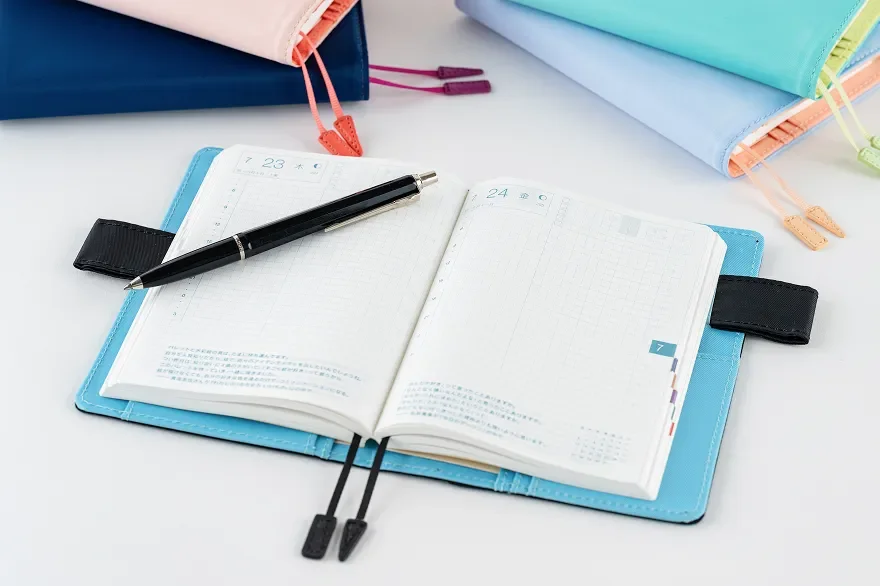
Life Book: one planner, no rules
Hobonichi does not come with a method you need to learn. You do not have to colour-code your tasks, fill in predefined boxes or write in the same way every day.
The structure is there to help, not to restrict you.
You can use a single planner for work appointments and personal notes. One day, a page may remain almost empty; the next, it may be filled from edge to edge. You can draw, use stamps, stickers and washi tape, write with a fountain pen or paste in a photograph, train ticket or receipt from a place you want to remember.
And this is how, over the course of a year, an ordinary planner gradually becomes something much more personal – a physical record of your year.
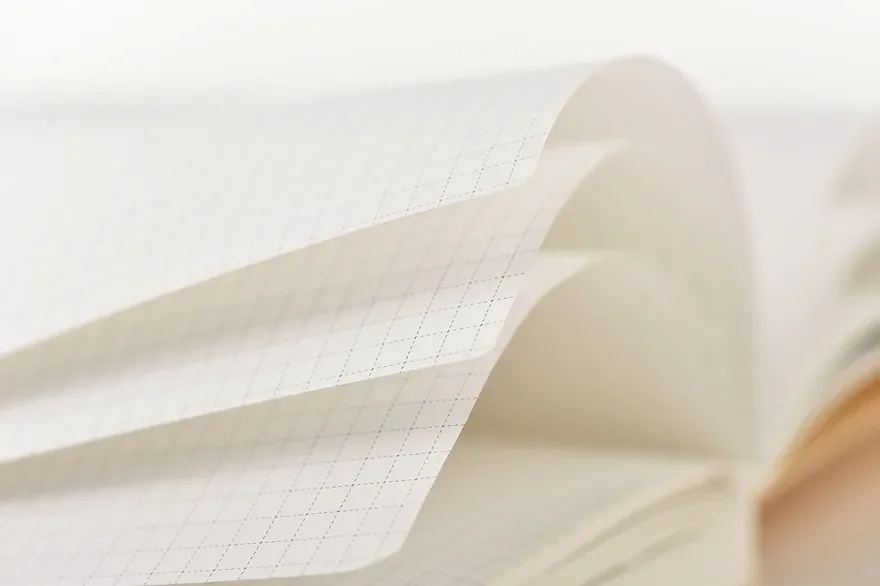
Thoughtfully designed paper for everyday writing
One of the defining features of Hobonichi is its extremely thin Tomoe River S paper. Thanks to its low thickness, a planner can contain hundreds of pages while still remaining relatively compact.
The paper is smooth, lightweight and designed for intensive everyday use. It works well with a wide range of writing instruments and has become especially popular among fountain pen users.
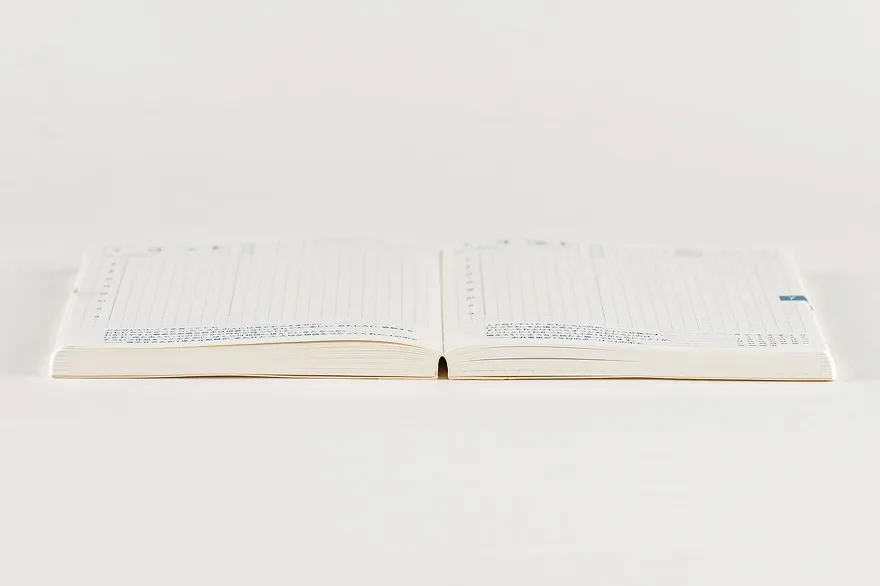
Because the paper is very thin, especially saturated inks may show through slightly on the reverse side. This is not necessarily bleed-through – it is precisely the combination of very thin paper and good ink resistance that allows even a full-year daily planner to remain pleasantly compact.
The binding is designed so that the planner opens comfortably and the pages lie as flat as possible. This is useful for ordinary writing, as well as drawing and collage work.
A subtle grid that stays out of the way
Another characteristic feature of Hobonichi is its fine grid. It helps keep lines of text straight, divide a page into sections, draw a simple table or create your own planning system.
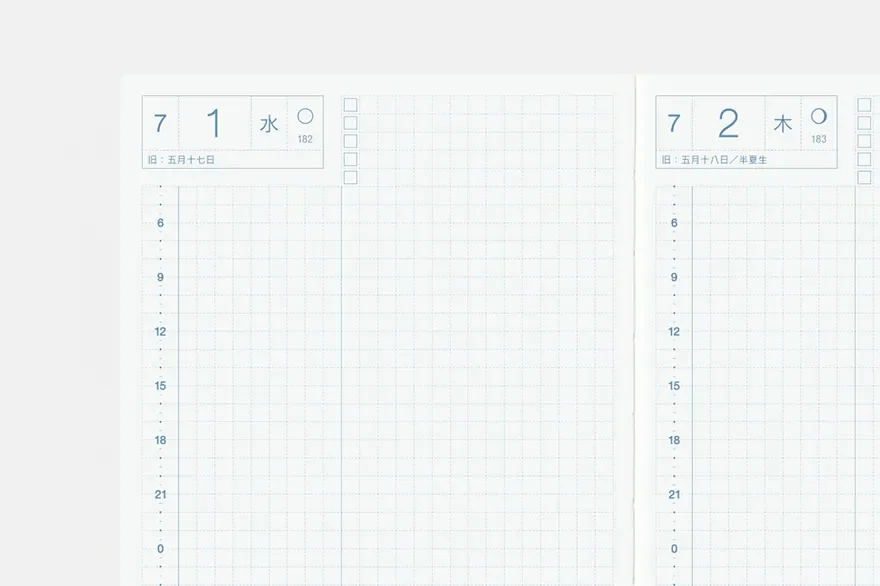
When you do not need it, however, the grid remains visually unobtrusive. The page does not feel like a form that has to be filled in, but rather like an open space you can use in your own way.
Which Hobonichi is right for you?
Choosing your first Hobonichi can seem a little complicated. Hobonichi is not a single planner, but several different formats built around the same philosophy.
To start with, you only need to decide how much space you need and whether you tend to think in individual days or in weeks.
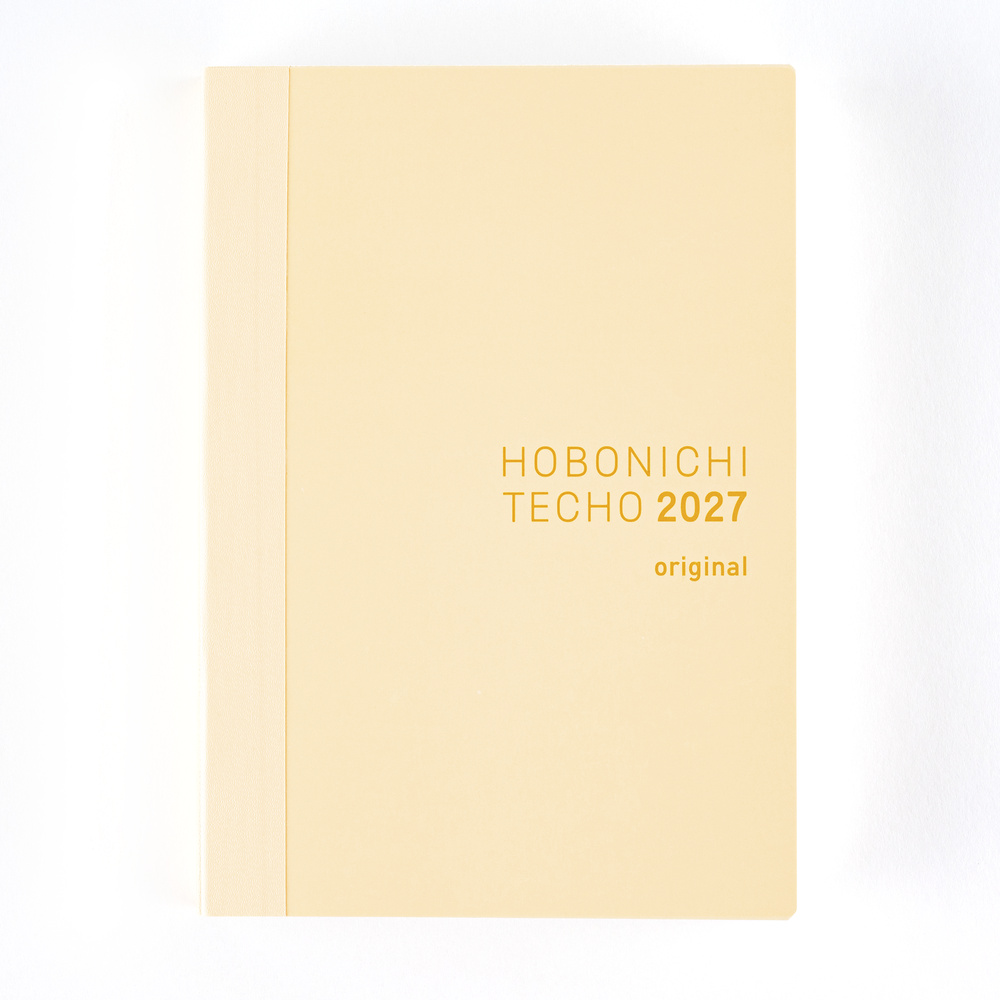
Original A6: one day, one page
Hobonichi Techo Original is the core and most iconic Hobonichi format. Its compact A6 size provides a separate page for every day.
It is small enough to carry with you every day, yet thanks to the very thin paper it offers a surprising amount of space. It works well for a combination of planning, notes and everyday journaling.
- Format: A6
- Layout: one page per day
- Best for: everyday planning, journaling and recording small moments
- Advantage: plenty of space in a compact format
If you want one small planner that can gradually hold almost everything throughout the year, the Original is a very good place to start with Hobonichi.
Planner A6: a cleaner take on classic Hobonichi
Hobonichi Techo Planner is based on the same daily A6 format. It also offers one page per day and is designed for those who want a compact planner with plenty of freedom.
It has an elegant, more understated character and, like the Original, works equally well for planning and personal notes.
- Format: A6
- Layout: one page per day
- Best for: anyone looking for a versatile daily planner in a compact format
Cousin A5: when you need plenty of space
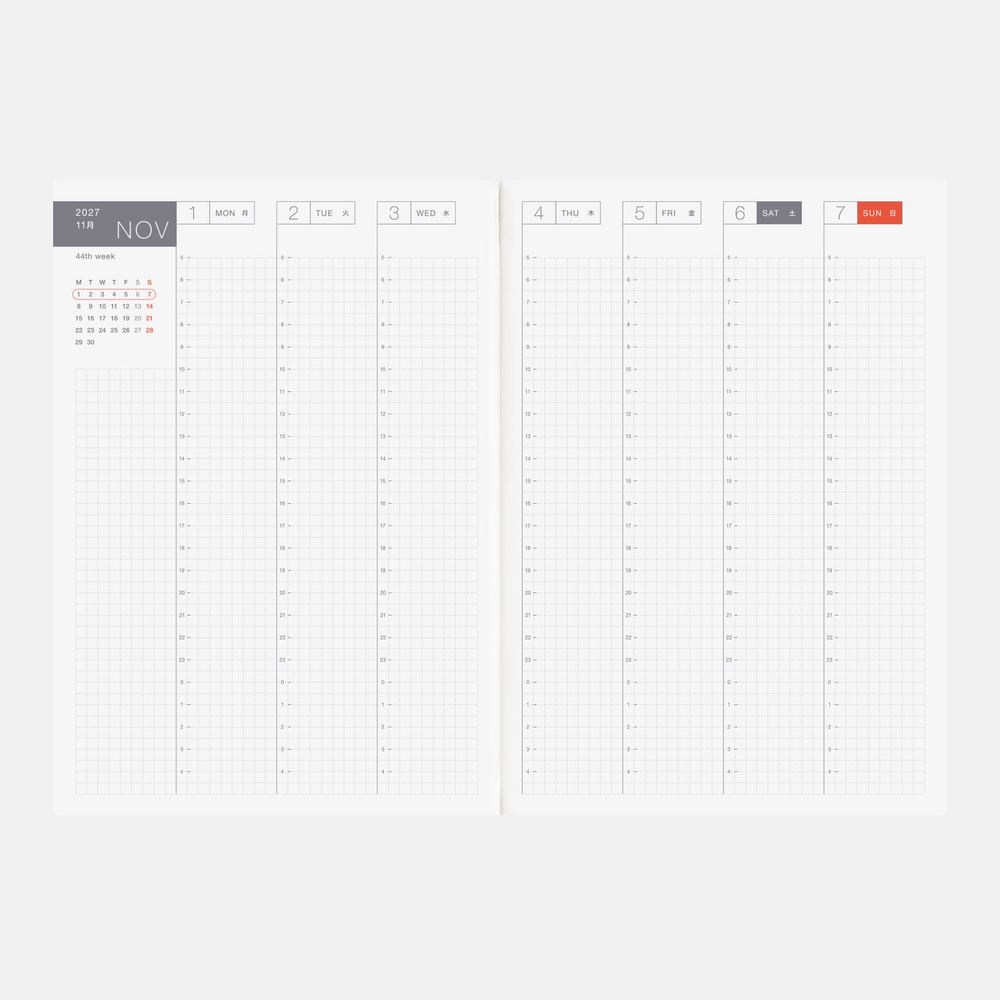
Hobonichi Techo Cousin uses the larger A5 format. It keeps the daily pages while also adding weekly spreads.
This allows it to combine long-term planning, weekly organisation and detailed daily notes in one place. It is especially popular with people who plan work and projects, keep extensive journals or enjoy combining writing, drawing and collage.
- Format: A5
- Layout: daily pages + weekly and monthly overviews
- Best for: detailed planning, work, study and creative journaling
- Advantage: the most space and several levels of planning in one planner
Weeks: your whole week at a glance
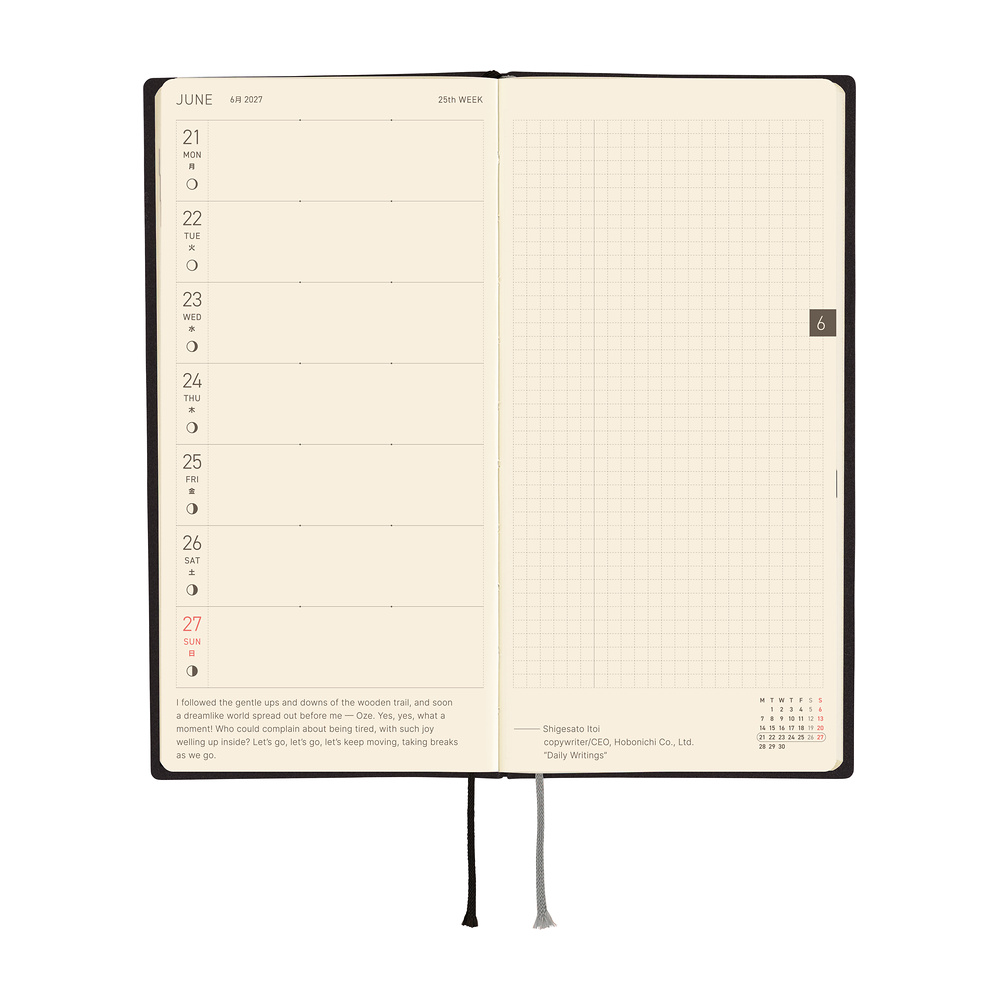
If you do not need a separate page for every day, Hobonichi Weeks may be the ideal choice.
It has a slim format roughly the size of a long wallet. On the left-hand page of each spread, you can see the entire week, while the right-hand page provides open grid space for notes, lists or tasks.
This combination of a weekly overview and a free notes page makes it an excellent work planner. You can understand what is coming up during the week within seconds, while still having plenty of room for additional notes.
- Format: slim, approximately the size of a long wallet
- Layout: week on the left, grid notes page on the right
- Best for: clear planning of work and personal time
- Advantage: the whole week is visible at a glance
Weeks Mega: the same weekly planning, with more room for notes
Weeks Mega keeps the same weekly layout as the standard Weeks, but adds significantly more blank note pages.
It is ideal for people who like compact weekly planning but also take a larger amount of notes, keep lists, track projects or collect ideas throughout the year.
A cover is part of the Hobonichi experience
With the Original A6 and Cousin A5 formats, the book itself does not have to be the finished product. Hobonichi has created an extensive system of interchangeable covers around them.
Every year brings a new collection: from simple colour variations and distinctive textiles to collaborations with illustrators, designers, artists and well-known brands. You can choose covers for the Hobonichi Original A6 or the Hobonichi Cousin A5.
The cover naturally protects the planner, but it is also a way of turning a practical object into something genuinely personal.
You can choose a simple cover that will not distract you while working, or a bold design that will make you happy every time you use it. The following year, you can place a new planner in the same cover – or choose a completely different one.
Why are the covers larger than the planner itself?
Classic Hobonichi covers are not simply tight sleeves around the book. Inside, they usually offer pockets for small papers, business cards or stickers, as well as the characteristic pen holders.
Your planner can therefore gradually become a small portable work kit where your planning, notes and a few essential tools are all kept together.
Stickers, stencils, memo pads and other Tools & Toys
An entire world of accessories has gradually grown around the planner itself, which Hobonichi refers to as Tools & Toys.
Some are purely practical: memo pads, sticky notes, bookmarks or stencils. Others are mainly there to make everyday use more enjoyable and give your pages a more personal character.
This is where the Hobonichi philosophy becomes particularly clear. Planning does not have to be only a way of becoming more productive. It can also be a daily ritual you genuinely look forward to.
Every Hobonichi looks different by the end of the year
At the beginning of the year, every planner looks almost the same: clean pages, a neat binding and no notes.
Then appointments begin to appear. Lists. Ink. Quick notes written on a train. Photographs. Stickers. A cinema ticket. Important phone numbers. A sketch made while waiting for coffee. And perhaps a few completely blank days as well.
The planner gradually begins to open differently, its pages gain volume and the cover may develop small traces of everyday use.
That is not an imperfection of Hobonichi. It is the point.
At the end of the year, you do not simply have a list of things you were supposed to do. You have a book that exists nowhere else.
Do I have to write in it every day?
No.
A blank page is not a mistake, and there is no need to fill it in afterwards simply to make the planner look perfect. Hobonichi can function as a work planner one week and remain almost empty the next.
You can return to it after a few days and simply continue.
This freedom to use the planner according to what you need at the time is one of the reasons the system works equally well for people who record every detail of the day and for those who only want a place for a few important notes.
How to choose your first Hobonichi
If you are new to Hobonichi, start by asking yourself two simple questions:
- Do I want to see the whole week at once, or do I want space for every individual day?
- Do I want to carry my planner with me all the time, or do I prefer more space on my desk?
If you want a compact daily planner, start with the Original or Planner A6.
If you want maximum space and a combination of weekly and daily planning, choose the Cousin A5.
If you mainly want a clear weekly planner, the most natural choice will be Weeks. And if you need more note pages, choose Weeks Mega.
Hobonichi Techo 2027 at kaš-mi-daš
For 2027, we have selected the international English editions of Hobonichi Techo planners, designed to be used comfortably outside Japan as well.
Our range includes the daily Original, Planner and Cousin, the weekly Weeks and Weeks Mega, separate A6 covers and A5 covers, as well as accessories for planning and journaling.
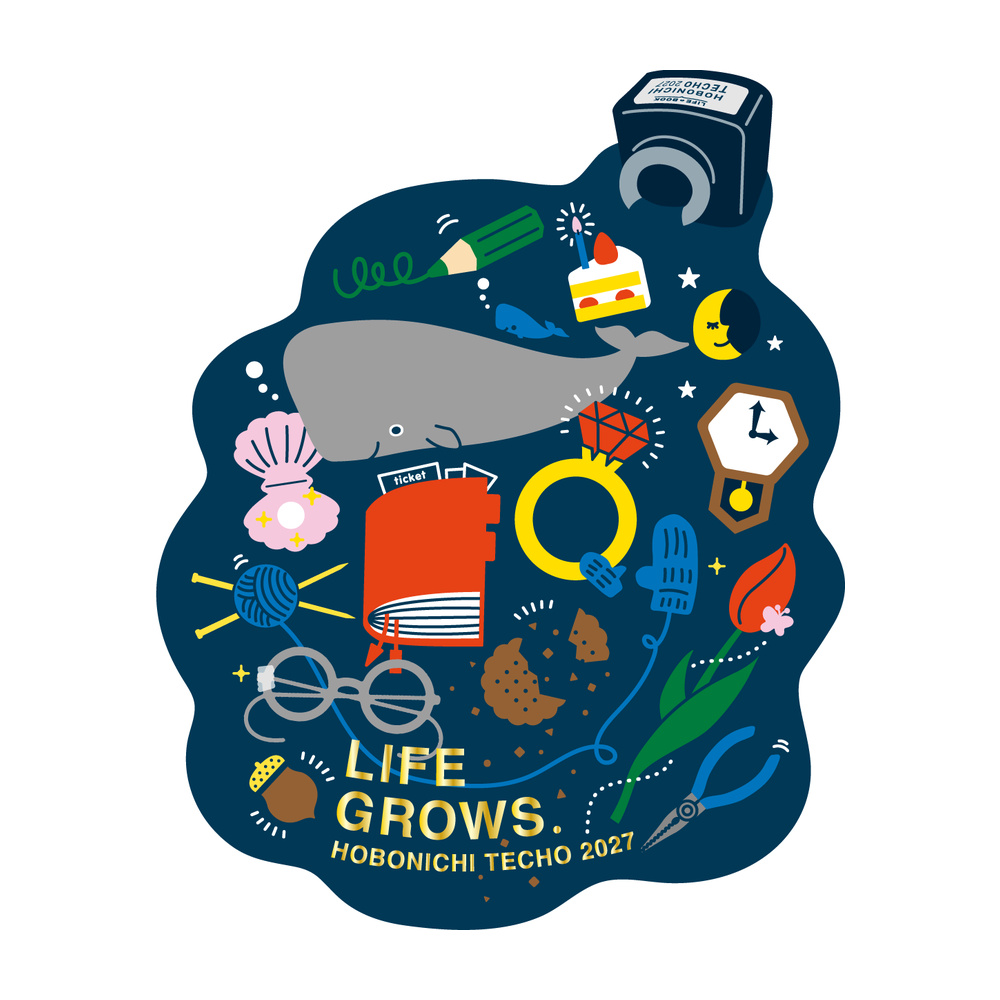
The 2027 collection is built around the theme LIFE GROWS – life grows, we grow, time moves forward, and the planner itself changes with us throughout the year.
Perhaps that is exactly why Hobonichi feels different from most planners. You are not buying a finished system that is supposed to look the same at the end of the year as it did at the beginning.
You are buying a blank book for one specific year of your life.